
In today’s digital era, Artificial Intelligence (AI) and Data Analytics are no longer buzzwords—they are powerful tools transforming how businesses operate, compete, and grow. Yet, many organizations still find these technologies complex and difficult to understand. This blog demystifies AI and Data Analytics, explaining what they are, how they work together, and why they matter for modern businesses.
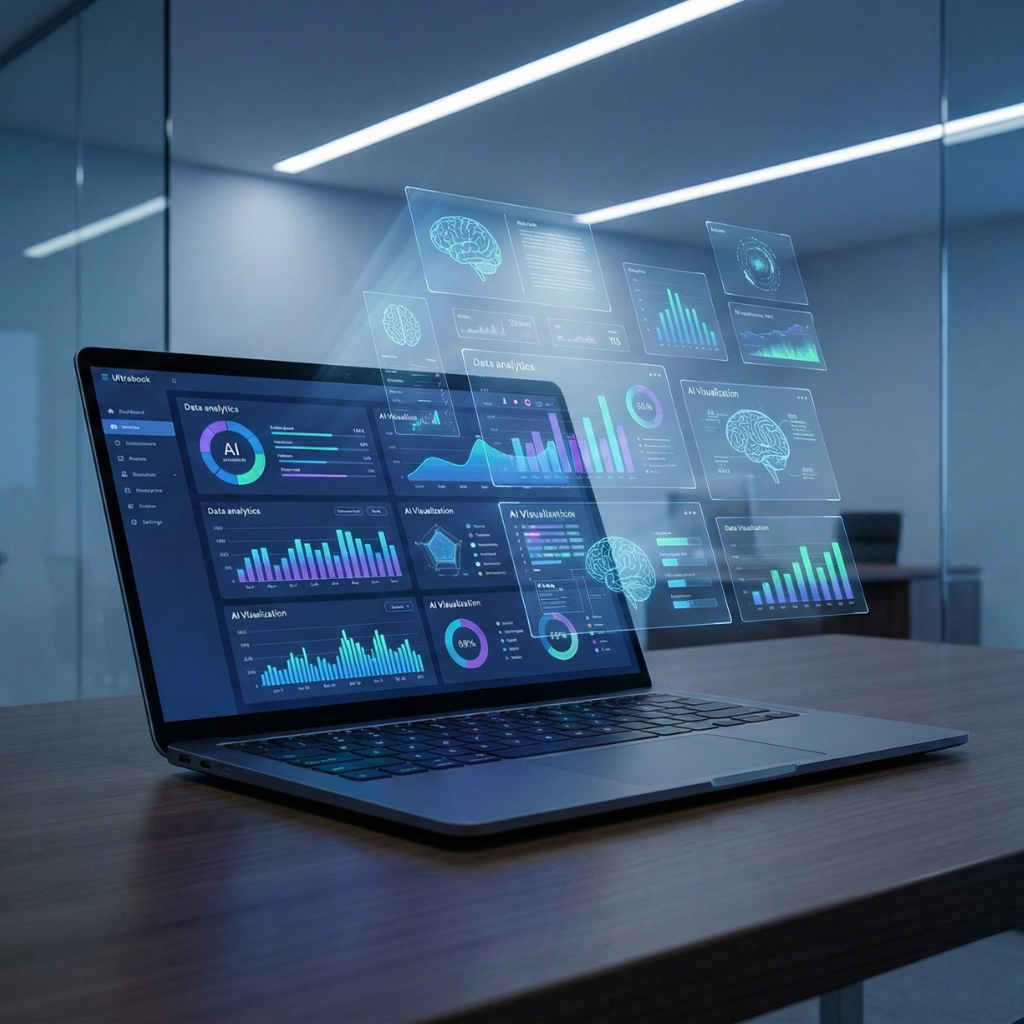
Understanding Artificial Intelligence (AI)
Artificial Intelligence refers to systems that can simulate human intelligence by learning from data, identifying patterns, and making decisions. AI enables machines to perform tasks such as prediction, automation, natural language processing, and image recognition.
Key AI Capabilities:
- Machine Learning and Deep Learning
- Intelligent Automation
- Natural Language Processing (NLP)
- Computer Vision
- Predictive Modeling
AI helps organizations automate processes, improve accuracy, and deliver smarter customer experiences.
What is Data Analytics?
Data Analytics is the process of collecting, processing, and analyzing data to extract meaningful insights. It helps businesses understand past performance, identify trends, and make informed decisions.
Types of Data Analytics:
- Descriptive Analytics – What happened?
- Diagnostic Analytics – Why did it happen?
- Predictive Analytics – What will happen?
- Prescriptive Analytics – What should we do?
Data Analytics turns raw data into actionable intelligence.
How AI and Data Analytics Work Together
AI and Data Analytics are closely connected. Data Analytics provides the foundation by organizing and interpreting data, while AI enhances analytics by learning from data and making intelligent predictions.
Together, they enable:
- Real-time decision-making
- Personalized customer experiences
- Fraud detection and risk management
- Operational optimization
- Strategic business planning
Business Benefits of AI & Data Analytics
Organizations that adopt AI and Data Analytics gain significant advantages:
- Faster Decision-Making
- Improved Efficiency and Productivity
- Enhanced Customer Insights
- Reduced Operational Costs
- Competitive Advantage
- Scalable and Future-Ready Systems
Real-World Use Cases
AI and Data Analytics are transforming industries such as:
- Healthcare – Predictive diagnostics and patient analytics
- Finance – Fraud detection and risk assessment
- Retail – Customer behavior analysis and demand forecasting
- Manufacturing – Predictive maintenance and quality control
- Logistics – Route optimization and supply chain insights
The Future of AI & Data Analytics
As businesses continue to generate massive volumes of data, the role of AI and Data Analytics will only grow. Organizations that invest in these technologies today will be better positioned to innovate, adapt, and lead in the future.
Conclusion
Demystifying AI and Data Analytics is the first step toward digital transformation. By understanding how these technologies work and how they complement each other, businesses can unlock new opportunities, make smarter decisions, and achieve sustainable growth.
At Brombeer IT Systems, we help organizations harness the power of AI and Data Analytics to drive innovation and business success.